ISPAD Newsletter - August 2026
ISPAD's August Newsletter is now available with exciting news. Click here to access to our latest news:
President's Message:

In 2016, I participated in a diabetes technology/quality of life debate with another ISPAD colleague. My role was to be the ‘Doubting Thomas’ and make the case for the negative. The debate was entertaining, and at the end of it, a tall Flemish pediatric endocrinologist from Montreal came up to me and pressed a small piece of paper into my hand. On it he had written a quote from George Santayana, “Skepticism is the chastity of the intellect, and it is shameful to surrender it too soon or to the first comer”. I was delighted. The reason I was often chosen to be on the “Nay” side of debates was that by nature I tend towards being both cynical and skeptical. At times though, I had felt I was the metaphorical lone wildebeest on the edge of the herd or the unappreciated Cassandra, and I found this positive acknowledgment of my collegial misanthropy most affirming. I flew home wallowing in my newly validated cynicism, feeling wise, misunderstood, and world-weary. A heady cocktail being consumed at altitude. But …. as Oscar Wilde opined, “There are only two tragedies in life: one is not getting what one wants, and the other is getting it.” All the more so when receiving a report card on one’s persona.
René Descartes is famous for his quote “I think, therefore I am”. The expanded version, though, is, “I doubt, therefore I think, therefore I am”. Thus, a certain amount of doubt or skepticism is critical for a considered life. However, too much cynicism can be a lazy strategy, a bulwark for affirmation bias and something that prevents one from engaging with new ideas. Worse still, it can be a form of self-censorship. The well-known Vietnamese-American author Ocean Vuong recently described the way his students often used cynicism to mask sincerity, preventing an effortful attempt in their endeavors. Further to this, cynicism and narcissism appear to be personality traits that co-segregate and coalesce. My persona report card was starting to look a bit dodgy (lazy, repressed, cowardly and narcissistic) and as my plane came in to land many hours later, I felt somewhat chastened.
We need positive energy and belief to both move science forward and provide excellent clinical care. Optimism is a key component of research. Banting himself stated, “Success consists of going from failure to failure without loss of enthusiasm.” We also need to be able to make hard-nosed decisions about separating the hype from the reality of proclaimed ‘Eureka!’ moments in research, and alternatively, in allocating scarce clinical resources to obtain the greatest good for the greatest number of our patients. Diabetes science and care are not well served by naïve ingénu(e)s. Neither are they well served by “Bah humbug” curmudgeons who believe in nothing new. So, how do we let our inner Pollyannas and Ebenezer Scrooges battle it out to strike a balance? I suspect this internal dialectical challenge is best resolved using critical thinking. The ability to be open to new ideas whilst objectively questioning assumptions (including our own biases), methodologies, comparing the scientific merits of various viewpoints, and arriving at a conclusion. This is not always an easy process, and it requires self-discipline not to fall back on unhelpful tropes, generalizations, or internal heuristics. All the more so when attending a conference where the amount of new information can be almost overwhelming.
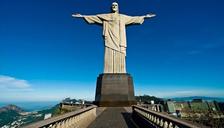
Our ISPAD Annual Conferences are agorae of data and debate. This year will be no exception- we have a full program and over 600 abstracts have already been submitted! There is a lot going on in pediatric diabetes care at the moment, and our meetings remain clearinghouses of ideas, concepts, and practices. In my experience, we do this well because of our broad membership base- consumers, all types of health care providers, and researchers. So, when you make your travel plans for ISPAD in Rio this year, remember to broaden your personal base and bring both Pol’s and Eb’s in your carry-on. Don’t bring one without the other! Lean in and engage in the discussions and the debate. Do something new- try playing a little ‘symposium roulette’ and go to something that you would normally not attend. Remember that warning from the well-known LATAM writer Gabriel José García Márquez, “wisdom comes to us when it can no longer do any good.” Let your inner optimist and skeptic loose together and look for the wise moments from all places. Take these home with you and use them when you can to do some good.
I look forward to hearing your voices.
See you in Rio!
Best to all,
Fergus